Brains and Brawn
I was kicked out of pee-wee soccer. Politely, after the second or third game of the season, my best friend’s father, or as we call him, Coach Dave, pulled my mother aside.
It was because I’d stand in the center of the field, allow the ball to whizz past my small body, and both teams would go sprinting past me. I’d then throw a determined look over my shoulder and race after the action on my chubby legs. I would be the hero. I’d reach the ball first and kick it into the net. Just like Amanda Bynes in She’s the Man, or Keira Knightley in Bend It Like Beckham. But I never did score the goal, so I was asked to leave.
I had more success three years later with field hockey. I took to the pitch with a passion. There was something to whacking a ceramic ball with a wooden scythe. It was discovered that my ballet turnout could be utilized in the goal box. I was named Goalie of the Year in the state tournament when I was 12, and shortly thereafter hung up my helmet.
I’d been swapping between shin guards and pointe shoes my whole childhood, but ultimately I sided with the studio. I wasn’t interested in being an athlete; I was an artist.
For a while, dancing was my only form of exercise. Though dancing was aerobic–it toned my calves and improved my stamina–I quickly learned that I had to cross-train to improve as a dancer.
I started with Hot Yoga in an attempt to improve my flexibility. After my first class, I walked away with a new state of mind. I started going weekly and was surprised to find it quelled the anxiety attacks I suffered from.
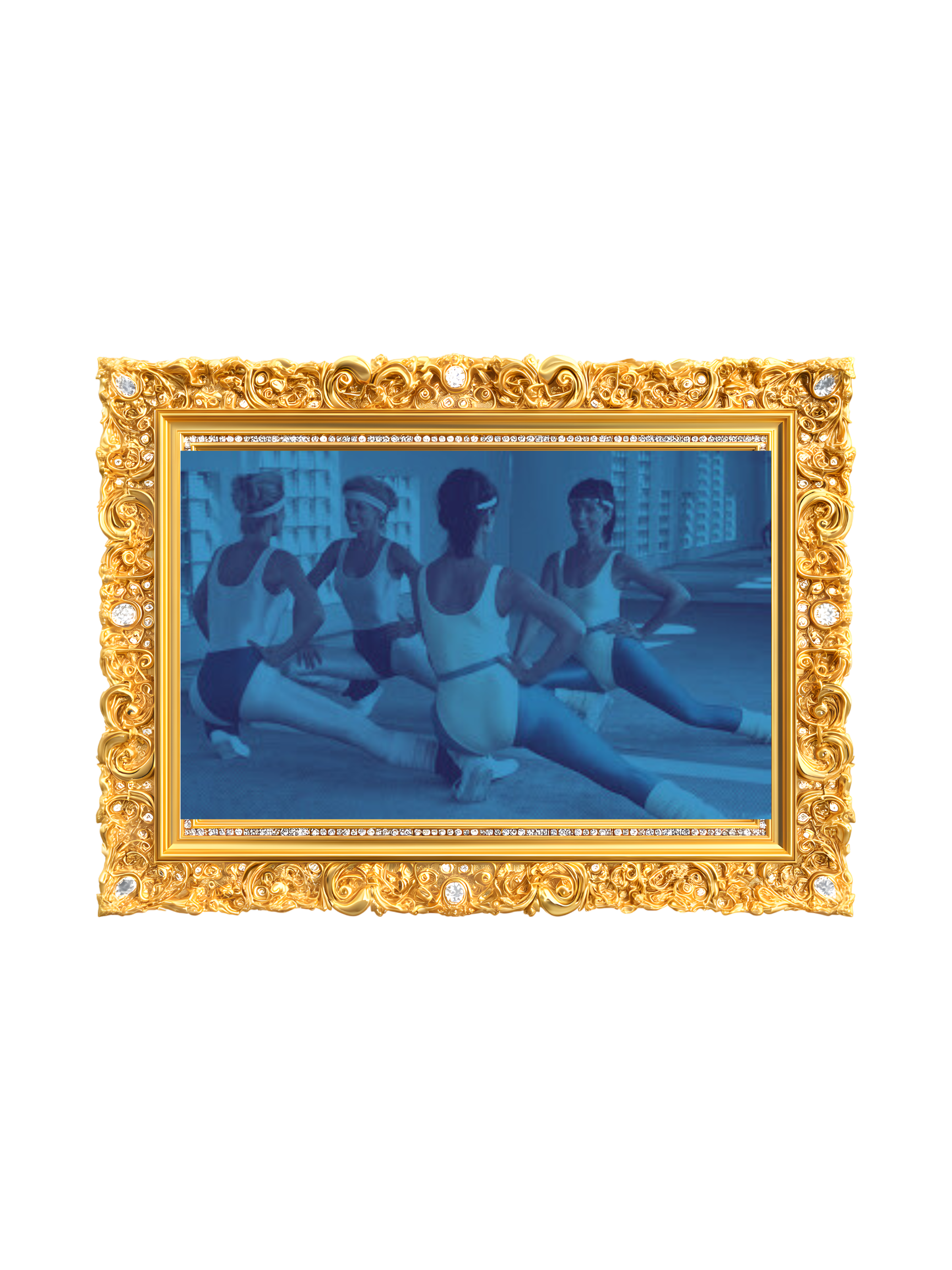
My dance studio had a reformer pilates classroom attached, and one fateful night, my Advanced Tap instructor got stuck in a traffic jam. I took my first pilates class, where I learned the names for body parts that had hurt for years, and more importantly, how to heal them.
At the end of my senior year, in the thick of AP Exams, I decided to sign up for a 5 AM Hot Vinyasa class. I figured it would calm my nerves and give me extra time in the morning to study before the test. I left class a few minutes early to shower, and as I was packing my things in the lobby, the teacher slipped out of the classroom. She looked at the front desk girl and groaned, “God, I just sucked today!”
I interrupted their conversation, emphasizing how great I thought class had been. She reminded me of myself. Of everytime I stepped off stage, convinced I delivered a poor performance, only to be met with flowers at the stage door. During that AP European History final, I decided I would be a fitness instructor, too.
Now, I’ve been teaching for seven years. I’ve worked with–I can’t believe I’m saying this, but it’s true–thousands of clients. Teaching has made me a better person. I’m trained as a first aid responder. I’ve worked with clients recovering from car accidents. I’ve ushered people through their first class in years, helped them rediscover movement. It’s been a privilege to be part of their journeys. But teaching has not come without its struggles.
I’ve been poked in my ribs, as clients lovingly tease. “I’m trying to look like you.” They don’t know that I struggle with my eating disorder recovery. They don’t know about the morphed body I see in the mirror. They don’t know how much it hurts when those comments stop coming. Is my recovery body not your #bodygoals?
I told a girl at a bar once that I was a pilates instructor. She turned to our mutual friend, sneered, “I don’t have to exercise to be this hot.” She was thin, with bird-like arms, blonde hair, and sweet brown eyes. I looked to the ground.
I wanted to shout back, “ME NEITHER!” Like a kid, trying to prove I’m something I’m not. Instead, I said. “Oh, I exercise for the mental health benefits.” I laughed as I mimed pulling a gun to my head. It was her turn to look down.
Throughout my career, I’ve been asked what I really do. It’s meant as a kindness, as it's common knowledge that most fitness instructors are really actors or dancers. But I always wondered what if I were just a fitness instructor?
Still, I’d reply, “I’m a writer,” to their surprise. Like they were shocked that someone with biceps or a toned derriére could sit at a laptop, could string a sentence together. I often wonder if we haven’t shaken the idea of brains vs brawn. If we’re still suffering from the images of muscleheaded henchmen or empty-minded cheerleaders.
Once, out of the blue, a client referred to me as ADHD. No shame for those who are, but my mental atypicalities are of a different variety. I’m just TALKATIVE! I prefer to be standing rather than seated. Maybe that’s why I don’t have a desk job!
I’ve had family members make remarks about my “little job.” They send me LinkedIn posts for jobs that I have no interest in, that pay far less than I currently make.
While my job has been discounted and cheapened to substance, I know how sacred these spaces can be, especially for women and queer people. After all, doctors warned women to steer clear of exercising as late as the 1970s, fearful the fairer sex might suffer from exhaustion or uterine prolapse.
Queer and femme-presenting people are often made to feel unwelcome, even unsafe, in traditional gym environments. You’ve seen the videos of gymbros leering or providing uninvited, and often wrong form corrections. Traditional lifting spaces are disproportionately male-centred.
In reaction, non-cis men veer towards group exercise classes. Whether it be Yoga, Step, or Zumba, these classes provide a safe environment for those who feel uncomfortable in other workout spaces.
Sometimes my clients bring their boyfriends and husbands. The humblest of them admits their fear and places their fates in my hands. The average man, though, shoulders his way into the studio. He assures me, he lifts, he can handle this “stretch class.” For those men, I make class especially difficult. Their girlfriends handle it deftly. We hold in our laughter as their boyfriends tremble and drip sweat.
They leave class huffing and puffing. “I can believe I got my ass whooped in a Pilates Princess class!” I smile, grinding my teeth together.
Over the near-decade of my career, I’ve witnessed many modes of exercise widely adopted by women be codified into crazes. Take into consideration the early ‘20s Hot Girl Walk, the Pink Pilates Princess era, and the Muscle Mummy influencers.
When we commercialise exercise into fads, rather than valid forms of movement, we delegitimize the practices. Hence, the adage, “white women will do anything but lift weights.”
It’s no secret that the American public leads sedentary lives. We are a nation of unnavigable suburbs and desk jobs. Our modern way of life prioritises comfort, convenience, and efficiency. We eat our processed lunches at our desks while we watch TikToks. We drive to work because the superhighway is the only way to get there. We get to the office as the sun rises and leave long after it's set.
But the good people of Greenpoint come to my class. They carve out an hour of their precious time to take care of their minds and bodies. I can’t speak to why they come to class. Some of them come for aesthetic reasons, and some are prescribed pilates for injury recovery. For whatever reasons they come, I’d like to think they stay for the friendships they make, for the strength they gain.
I’ve been the first person my clients tell that they’re pregnant–they need modifications. I’ve held their hands through breakups–she started crying when a Phoebe song came on. I’ve cheered along when they got a promotion–they have to come to the earlier class, new work schedule.
When a new client comes to class, they grab me by the arm, holding on to me like a life raft. They pull me aside, “I’m not an athlete,” they whisper. I laugh, “Oh, trust me, neither am I.”
Movement changed my life for the better. It acts as a balm and an outlet. Some of my closest friends are former clients and co-workers. I know more about my body than ever before, and it is an honor to teach my clients more about their own. So while my job comes with snide remarks and frustrating stereotypes, it is a privilege to watch them move through life while I guide them through movement.